
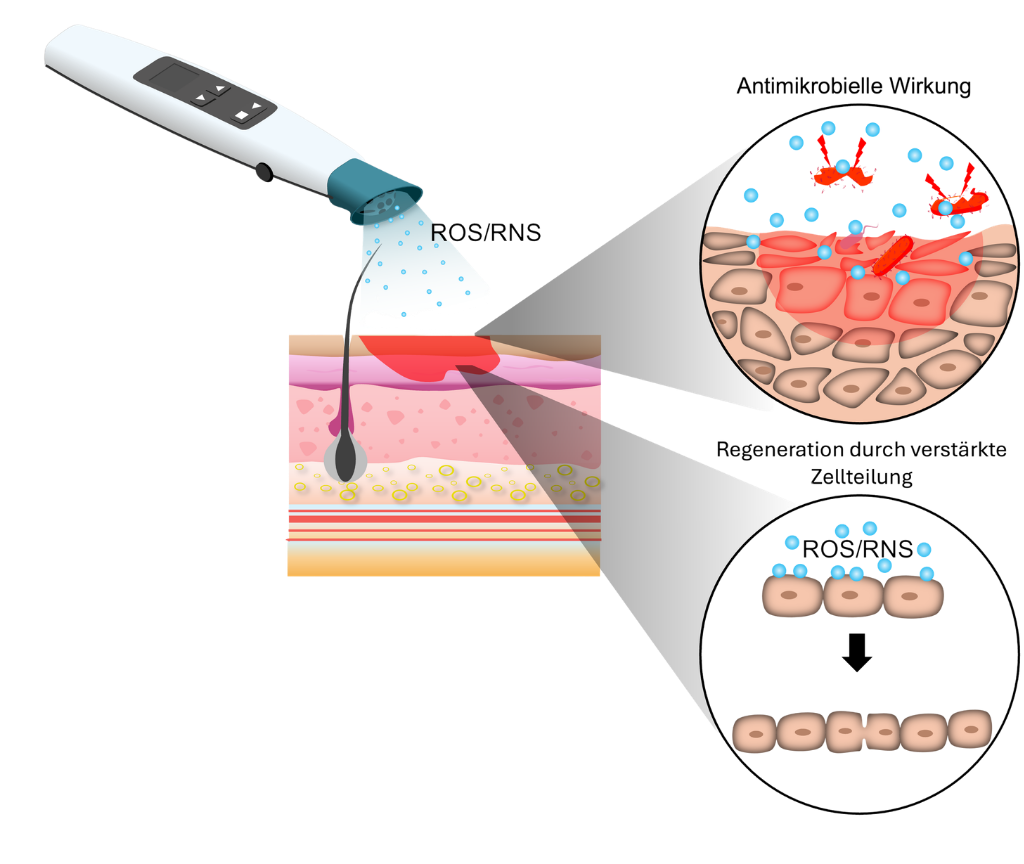

PetPlasmaPen generates cold atmospheric plasma — an ionized gas containing
reactive components that act directly at the treatment surface.
These reactive elements help to reduce pathogens while also supporting biological processes linked to wound healing, including:
This dual-action approach is one of the reasons cold plasma therapy is rapidly gaining attention in veterinary wound and skin care.
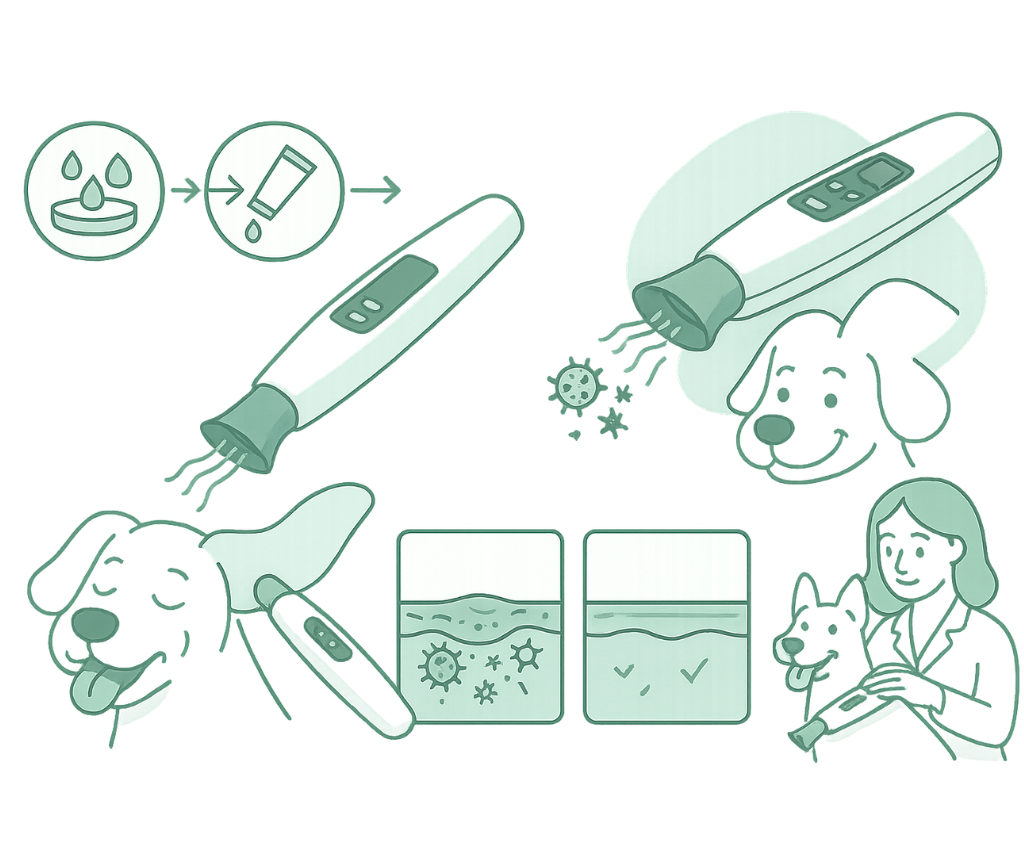
PetPlasmaPen is designed for clinical situations where cold plasma therapy has shown strong relevance in veterinary medicine, including:
Cold plasma therapy is supported by a growing body of veterinary and translational research focused on wound healing, antimicrobial activity, and treatment tolerance.
PetPlasmaPen is a veterinary medical device that uses cold atmospheric plasma to support wound healing and manage skin conditions in animals. It delivers reactive components directly to the treatment area.
Cold plasma generates reactive elements that interact with the skin surface. These components help reduce pathogens while supporting biological processes such as tissue repair, circulation, and inflammation control.
It is commonly used for acute and chronic wounds, delayed healing, superficial infections, hot spots, pyoderma, pododermatitis, and other dermatological conditions requiring topical support.
Cold plasma therapy is generally well-tolerated in veterinary applications when used according to clinical guidelines. Treatment suitability depends on the individual case and should be assessed by a veterinary professional.
PetPlasmaPen is not a replacement for antibiotics but may support antimicrobial strategies. It can be used as part of a broader treatment plan, especially where antimicrobial stewardship is important.
Yes, a growing body of veterinary and translational research suggests benefits in wound healing, antimicrobial activity, and treatment tolerance. Outcomes can vary depending on treatment protocols and case selection.